

Bafumbira & Banyarwanda Indigenous Tribes of Uganda: What makes them different? How about sameness?

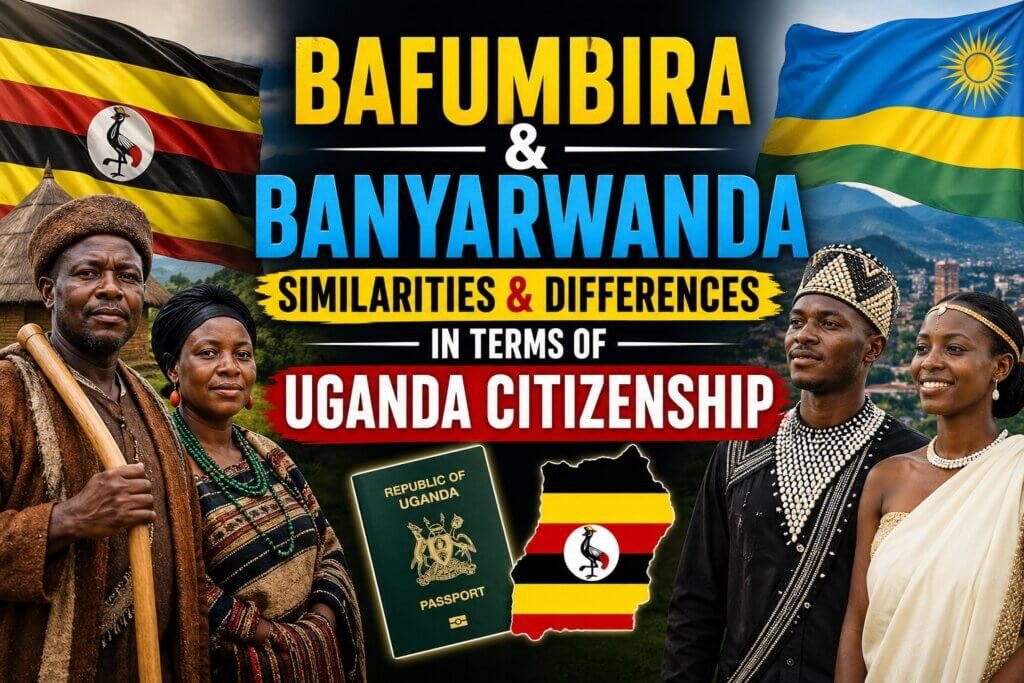
In the intricate tapestry of Uganda’s ethnic landscape, few identities are as debated, misunderstood, or politically sensitive as those of the Bafumbira and the Banyarwanda. To a casual observer, the two groups are indistinguishable, for they share a language, similar cultural rites, and a common ancestral lineage. However, within the borders of Uganda, the distinction between them is not merely a matter of pride; it is a matter of constitutional law, history, and political survival.
This article explores the “Anatomy of Belonging” for these two groups, tracing their 1,500-year history in the region, the 1910 geopolitical “accident” that defined them, and the modern movement to rebrand their identity under the banner of Abavandimwe.
I. The Ancient Foundation: 1,500 Years of Presence
To understand the indigeneity of the Bafumbira and Banyarwanda, one must look past the 20th-century borders. The ancestors of these groups were part of the Early Iron Age Bantu expansion.
Archaeological and linguistic evidence suggests that these Bantu-speaking pioneers settled in the fertile volcanic foothills of the Virunga ranges (modern-day Kisoro) and the surrounding rift valley highlands as early as the 5th Century AD (c. 500 AD).
I hope you are now familiar with our different theories regarding the origin of Bantu or the first Banyarwanda to occupy the great lakes region.
No matter the origin (whether migratory, from far places of Cameroon, Nigeria, or even Asia, or sky-descend, as in those that fell from the sky), the overall picture is that they later founded the modern-day Rwanda and lived together for hundreds of years under their leaders or kings and they were all known as Banyarwanda, though of different clans and social structures. We have explored Bafumbira clans and social structures in other articles too.
Note everything in the summary below:
The “Indigenous Head-Start”
When we say the Bafumbira and Banyarwanda have been in this region for 1,500 years, it places them among the oldest settled communities in Uganda. By comparison:
- Bafumbira/Banyarwanda: Settled in the southwest c. 500 AD.
- Baganda: Settled in central Uganda c. 1200–1300 AD (800 years later).
- Luo (Acholi/Alur): Settled in northern Uganda c. 1500–1600 AD (1,000 years later).
Except for the Batwa (the original hunter-gatherers), the Bafumbira and the indigenous Banyarwanda are technically the “Senior Citizens” of Uganda’s Bantu population. They did not migrate into a pre-existing Ugandan state; they were a foundational civilization that was already 1,400 years old when the British “invented” Uganda in the early 1900s.
NB: We have explored how native or indigenous the Bafumbira or Banyarwanda in other article and video as well.
II. The Sameness: A Shared Cultural DNA
At their core, the Bafumbira and Banyarwanda share the same Sociological Anatomy. This is defined by a three-tiered structure:
1. The Clan System (Ubwoko or Imiryango)
Both groups are organized into ancient, cross-cutting clans. These clans are the “Bloodline” and are more important than political labels. The Abasinga (Kite totem), Abazigaba (Leopard totem), and Abasindi/Abanyiginya (Crested Crane totem) are found in both groups. Because these clans are exogamous (you must marry outside your clan), they created a vast web of kinship that ignores modern borders.
Yes, Banyarwanda and Bafumbira are one, for they indeed share bloodline clans. They are brothers and sisters, for they share a similar origin.
2. The Social Classes
Historically, both societies were organized into three functional classes:
- The Batutsi: Traditionally pastoralists and the political elite.
- The Bahutu: The master agriculturists who developed the famous terrace farming of the volcanic slopes.
- The Batwa: The indigenous forest dwellers and specialized artisans.
Yes, Bafumbira and Banyarwanda are all made up of Tutsi, Hutu, and Twa social classes.
3. The Language and culture.
They speak Rufumbira and Kinyarwanda, which are mutually intelligible dialects. Their proverbs, folklore, and naming conventions (such as naming children after God—Habyarimana, Nshizirungu) are identical.
Yes, Bafumbira and Banyarwanda share a similar cultural heritage, though with some ‘dilutions’ due to migrations, cultural assimilations, and regional or geographical differences.
III. The Difference: A Tale of Two Citizenships
If they are culturally the same, why are they listed as two separate tribes in the 1995 Ugandan Constitution (Schedule 3, Communities #6 and #24)? It is generally said that, during the processes leading up to the 1995 constitution (parliament discussions or sessions), also known as hansards, all Banyarwanda (including the today’s Bafumbira) were asked to rebrand themselves as Bafumbira and some accepted (the ones we now know as Bafumbira) and others refused and retained their name ‘Banyarwanda’, giving rise to the two tribes. However, in my view, that is an oversimplification. Bafumbira and Banyarwanda are different, very different.
The difference is Geographical, Political, Legal, and even Cultural. Let me explain a little bit.
1. The Bafumbira: “The Stationary Tribe” with Ancestral Land.
The Bafumbira are the people of Kisoro District. In 1910, the Anglo-German-Belgian Boundary Commission moved the border of the British Protectorate. Overnight, the people of Bufumbira County were cut off from the Kingdom of Rwanda and became “Ugandans.” On the other hand, the Banyarwanda, or at least almost all of them are immigrants! They moved from Rwanda to Uganda, first, in search of work and livelihood in the 1800s and early 1900s, and second, due to ethnic wars in the 1959 and 1994.
This is the biggest difference. And Bafumbira were happy to rebrand themselves, for their name reflected their land or soil, their mountains, and everything they held dear. Bafumbira have an ancestral land. Banyarwanda do not. Of course, it is important to note that a few Banyarwanda originally staying in Kisoro never adopted the new ‘Bafumbira’ brand, but that is on a very negligible scale.
- The Distinction: They are “Indigenous by Annexation.” They never moved; the border moved over them.
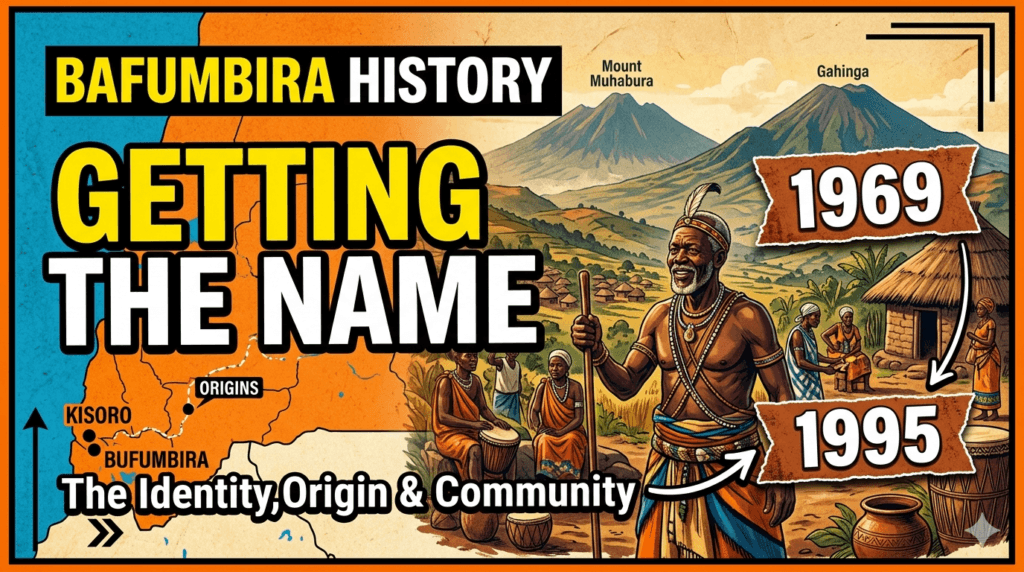
- The Rebrand: In 1969, to distance themselves from Rwandan refugees fleeing the 1959 revolution, the residents of Kisoro officially adopted the name “Bafumbira” (People of the Mufumbiro mountains).
2. The Bafumbira: Ugandans since 1910.
Another big difference lies in the time period they both became Ugandans. For Bafumbira, they became Ugandans as early as 1910 when Uganda under the British Protectorate extended her borders. We explored this deeply in this article and this video. On the other hand, Banyarwanda are a mixture of even the most recent migrations, for example, the ones of 1994 or even later. This is a very serious difference.
In fact, this is the most troublesome issue about the Banyarwanda and their Ugandan citizenship. Mostly, it is hard to tell which Munyarwanda is of recent migrations and of old settlement. Let me explain this point further.
The Banyarwanda (Ugandan): “The Migratory Indigenous”
While the Bafumbira stayed in Kisoro, many other Kinyarwanda-speaking families moved into other parts of Uganda (Ankole, Buganda, Bunyoro) in the 1700s, 1800s, and early 1900s for grazing land or trade. These ones are, by all measures, Ugandans. Why? Because by then, the modern-day Uganda had not been established. When Ugandan borders got established during the 1910 and 1926 border shifts, these Banyarwanda were already inside. They are Ugandans.
- The Distinction: Under the Ugandan Constitution, any Banyarwanda family that was present within the borders of Uganda by February 1, 1926 (the final date for Uganda border establishment), is legally an indigenous Ugandan.
- The other Banyarwanda: However, as we already noted, many more Banyarwanda came in during the 1959 and 1994 wars and many other years between and after. These are refugees or immigrants, and not Ugandans. To be counted Ugandans, certain legal steps or processes should be taken. As such, in practice, it is hard to tell the difference between the Banyarwanda of before 1926 and those of after 1926, a confusion they do not share with Bafumbira.
3. The Bafumbira Culture and Language
While we have established that both Bafumbira and Banyarwanda share culture and heritage, many things have happened over time, leading to a few changes in their culture and language. For example, the Rufumbira Language, though a version of Kinyarwanda, is surely different from Kinyarwanda, having been influenced and mixed up with other languages in Uganda.
Also, culture has undergone serious changes, influenced by surrounding Uganda and Congo communities. As such, it is not entirely true to say that Bafumbira are Banyarwanda or that Banyarwanda are Bafumbira. They are a distinct people and culture, but with similar origin and heritage. This is the third most important difference.
In relation to the above point, even the Banyarwanda of Uganda are surely not the Banyarwanda of Rwanda. Some of them do not even know or remember their language, and many more have intermarried and mingled with other cultures, completely changing their ways of life and language.
Culture is mostly reflected in someone’s food, dress code, language, religion or beliefs, and the general way of life. If these have changed or got absorbed by other cultures, it is not entirely true to still claim that same culture.
You can claim your origin, heritage, and history, for each one of us has a beginning, a story of origin. However, we need to embrace the future, the people we have evolved into, and not keep holding onto a past we no longer are or have. As such, even for Banyarwanda of Uganda, they are truly not Banyarwanda of Rwanda. This brings me to the ‘Abavandimwe Movement’
IV. The “Abavandimwe” Movement: Frank Gashumba’s Take
In recent years, a controversial yet powerful movement has emerged, led by social activist Frank Gashumba. He argues that the label “Banyarwanda” has become a “poisoned chalice” in Uganda. Despite being indigenous for centuries, the name “Banyarwanda” often causes them to be treated as foreigners, denied National IDs (NINs), or viewed with political suspicion.
I have already this confusion above. In practice, it is usually hard for officials to tell if the Munyarwanda in front of them is of ‘before 1926’ or of ‘after 1926’.
Gashumba proposes that Ugandan Banyarwanda should officially change their tribal name to Abavandimwe, which means “Brethren” or “Those who share a mother/womb.”
- The Logic: Just as the people of Kisoro became “Bafumbira” to survive politically in 1969, Gashumba argues that the broader community needs a name that identifies them by their Ugandan citizenship rather than their Rwandan ancestry.
- The Goal: To eliminate the “Refugee” stigma. By calling themselves Abavandimwe, they hope to assert that they are a distinct Ugandan tribe, separate from the citizens of the modern Republic of Rwanda.
The Controversy
This idea has met both support and resistance. Supporters see it as a necessary shield against discrimination. Critics, however, argue that changing the name “erases” their history and that the focus should be on enforcing the Constitution, which already recognizes them as indigenous, rather than hiding their heritage.
I personally think Gashumba’s idea is valid. It could even be any other any name, but not necessarily ‘Banyarwanda’. Some scholars have argued that Uganda is not the first country to host a tribe with a name similar to another existing country. However, in my view, that does not justify the refusal to rebrand. It might have worked for those other countries or those other tribes, but may not work so well for the Banyarwanda. So, the rebranding is really relevant.
V. Conclusion: The Seniority of Belonging
The Bafumbira and the indigenous Banyarwanda represent a paradox of Ugandan history. They are among the most ancient settlers of the land, arriving in the 5th Century AD, yet they are often the most questioned in terms of their “Ugandanness.”
The “Sameness” between them is biological and cultural—a 1,500-year-old heritage of iron-smelting, terrace farming, and clan loyalty. The “Difference” is a 116-year-old political boundary that decided who would be called a Mufumbira (in Kisoro) and who would remain a Ugandan Banyarwanda (elsewhere).
Whether the movement toward the name Abavandimwe succeeds or not, the “Anatomy” of these people remains unchanged. They are the sons and daughters of the volcanoes, a stationary civilization that has watched kingdoms rise and fall for fifteen centuries, and they remain the bedrock of Uganda’s socioeconomic transformation.
References and Further Reading
- Uganda Constitution (1995): Schedule 3: List of Indigenous Communities
- Citizenship Rights Africa: The Identity Crisis of Ugandan Banyarwanda
- 101 Last Tribes: Bafumbira: History of the Mufumbiro Peoples
- The Independent Uganda: Frank Gashumba and the Abavandimwe Question
- Mateke, P. (1970): The History of Bufumbira, Makerere Historical Journal.
- Monday Times: Bafumbira vs. Banyarwanda: Legal and Historical Realities
- Kitara Foundation: Ancient Clans of the Bantu Highlands
Well compiled, I owe you a big bottle and Kikomando
I am waiting for this bottle and kikomando! When do I get it? You can as well support our work by just donating as little as 10k or even less: https://bafumbira.com/donate/