

The Origin of ‘Bafumbira’ name: When and How did the Banyarwanda of Rwanda become the Bafumbira of Uganda?

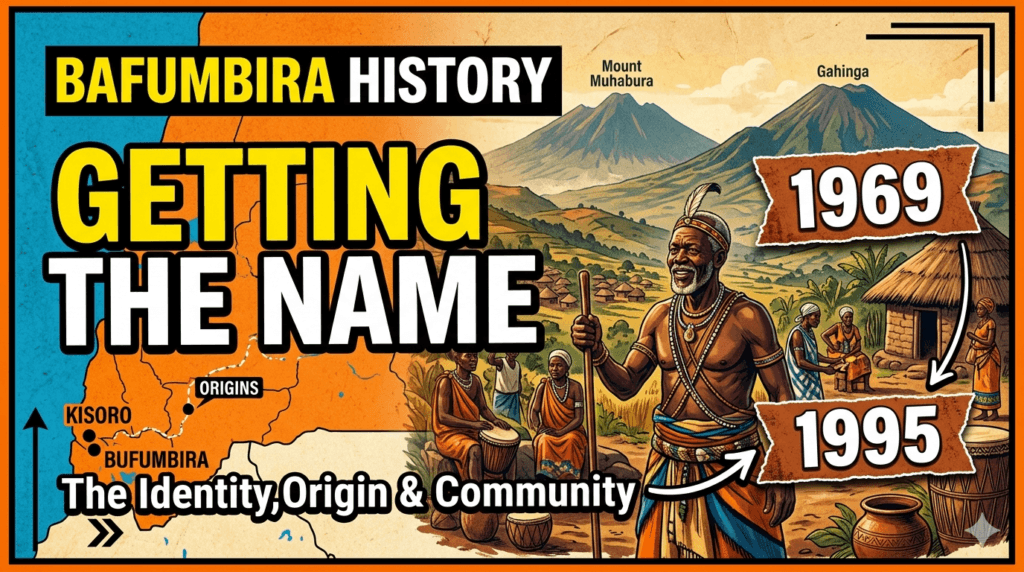
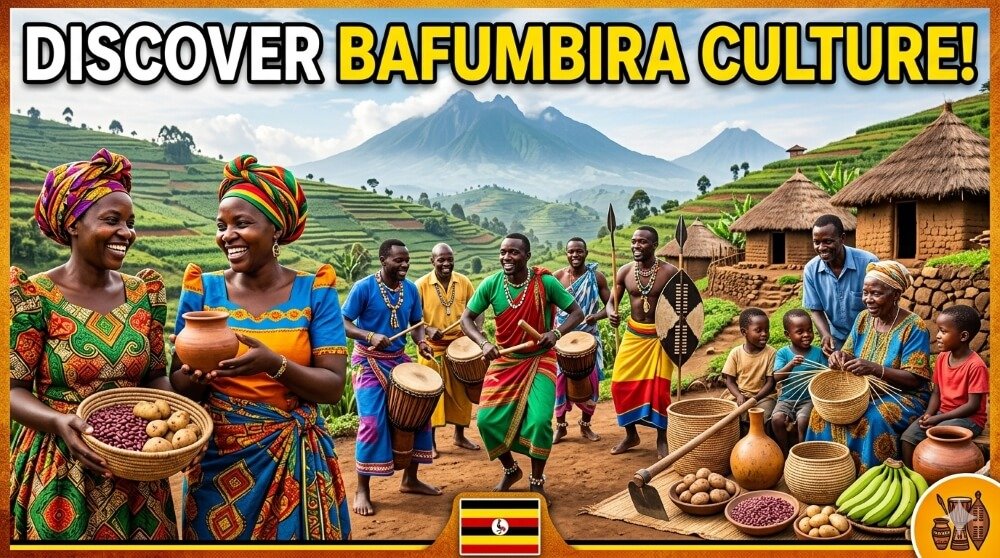
Bafumbira People: In the southwestern corner of Uganda, nestled beneath the majestic shadows of the Virunga Volcanoes, lives a community whose identity is as rich as the volcanic soil they till.
Known today as the Bafumbira, this group occupies the Kisoro District, a land of mist, emerald hills, and deep historical complexity. However, what most do not know is that it took a serious historical journey and courageous leaders to achieve the ‘Bafumbira’ brand as we know it!
The transition from being “Banyarwanda” of Rwanda or even of Uganda shortly after 1910 to “Bafumbira” is not merely a name change; it is a profound saga of colonial cartography, political survival, and the birth of a distinct Ugandan identity. In this brief article, I explain the origin of Bafumbira Name and a bit of the origin of Rufumbira Language.
NB: We have already explored the nativeness or indigenousness of Bafumbira Tribe, read it here. We also have the full video here.
NB: Wait! Some friends of mine have even told me that ‘Bafumbira’ meant ‘those that keep secrets’. According to these commentators, Bufumbira was famous for providing refuge to Rwanda’s defeated kings or whoever was seeking safety from anything! I have no way to verify this, but it makes sense! Kisoro is a haven!
1. The Roots: Life Before Borders (Pre-1884)
Long before the “Scramble for Africa” in the 1884-1885, the people of the Mufumbiro ranges were part of the broader cultural and political sphere of the Kingdom of Rwanda. They were ethnically Banyarwanda, consisting of the Bahutu (cultivators), Batutsi (pastoralists), and Batwa (the original forest dwellers). We explored these details in our earlier article.
The term “Bafumbira” did not exist as an ethnic label. Instead, people were identified by their clans (ubwoko) or chiefdoms with their clan leaders, known as ‘Abatware b’Umuryango’ or, following the expansion of the Nyiginya Dynasty, by their relationship to the Rwandan monarchy, particularly under the reign of King (Mwami) Kigeli IV Rwabugiri (1853–1895), who consolidated control over these northern territories.
However, it is important to note that the region itself was already known as ‘Mufumbiro’ or Bufumbira in relation to the volcanic mountains. As such, even before the official recognition of the name Bafumbira, colonialists and officials would at times use the words ‘the people of Mufumbiro’. According to the book, the History of Rwanda, King Rwabugiri of Rwanda (1865-1895) expanded the territories of the kingdom by annexing a nothern part called Bufumbira.
By the way, it is important to note that while historians like Alexis Kagame and the Rwanda Cultural Heritage Academy date Rwabugiri’s reign as beginning in 1853, others, for example, Jan Vansina, push it forward to as far as 1867, suggesting that his predecessor, Mutara II Rwogera, ruled until 1867.
The difference is, if we consider 1853, we mean that Rwabugiri inherited the throne as a child (around ages 7–12) and ruled under the regency of his mother, Queen Mother Nyirakigeli Murorunkwere, until he was of age. However, if we consider 1867, then we focus on when he began exercising full independent authority.
Either way, the above is for history’s sake. Otherwise, let us move forward with our today’s endeavor.
2. The 1910 Partition: How the Land Became Uganda
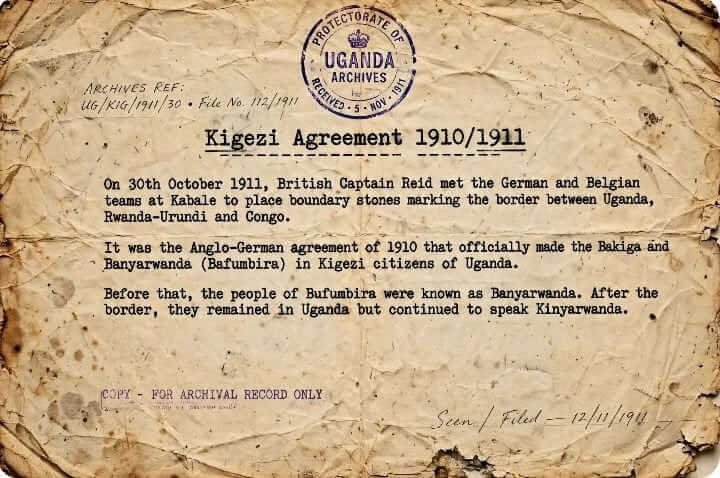
The turning point for the Bafumbira occurred not in Africa, but in Europe. Europeans distributed Africa among themselves in what is historically known as the Berlin Conference (1884-1885). However, following the Berlin Conference (1884-1885), the borders of East and Central Africa were vaguely defined, leading to a tense standoff known as the Kivu Frontier Incident (1909–1910) between the British (Uganda), Germans (Rwanda), and Belgians (DRC).
In May 1910, the Anglo-German-Belgian Boundary Commission met to finalize the borders.
- The Swap: Through the Anglo-German Agreement, Britain received the “Mfumbiro” region (now Kisoro) in exchange for recognizing German claims elsewhere, including parts of Kilimanjaro.
- The Result: On May 14, 1910, the Bufumbira County was officially annexed to the British Uganda Protectorate as part of the Kigezi District.
Overnight, thousands of Banyarwanda became British subjects. While their cousins in the south remained under German (and later Belgian) rule in Rwanda, and those to the west became subjects of the Belgian Congo (the Banyamulenge), the people of Kisoro began their journey as Ugandans.
3. The Language and Education Paradox
Despite the political separation, the cultural umbilical cord remained intact. For decades, the primary language of instruction and liturgy in Kisoro remained Kinyarwanda.
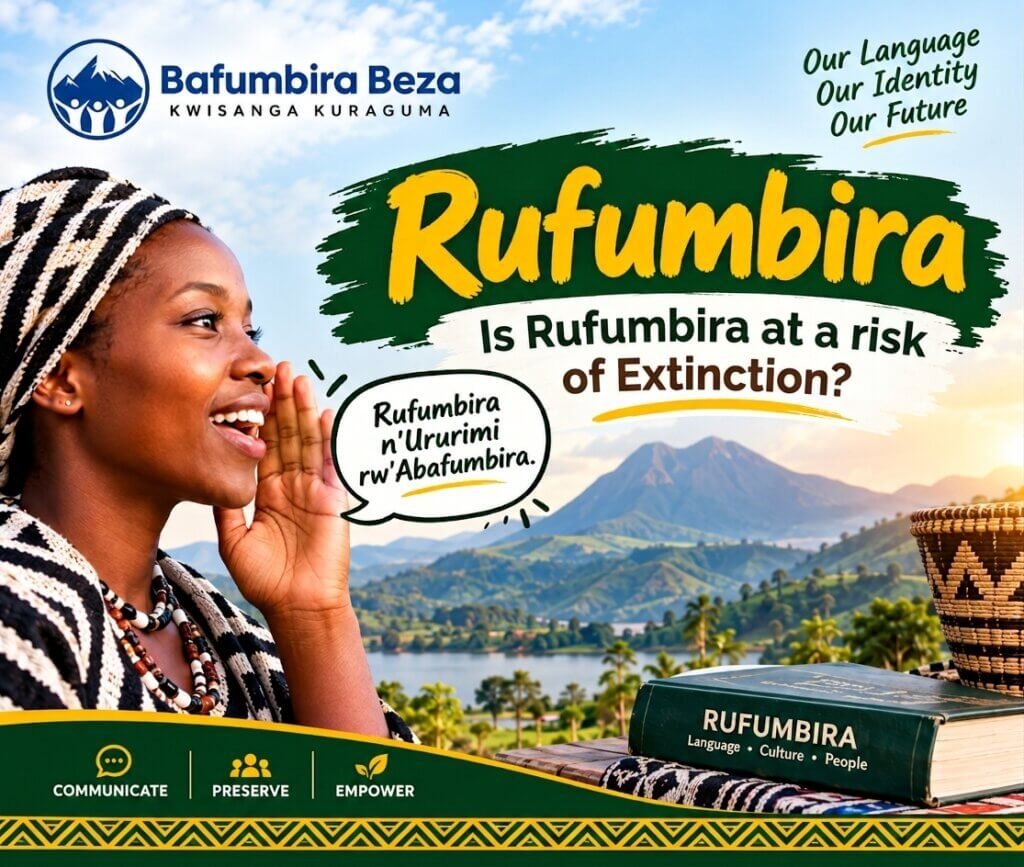
Until the 1960s, textbooks and Bibles were primarily sourced from the Kabgayi Catholic Mission near Kigali. However, with the influence of neighboring languages, there developed a unique linguistic environment where the people spoke a different kind of Kinyarwanda, and it was later termed as Rufumbira. In other words, Rufumbira is dialect of Kinyarwanda enriched with local nuances.
4. 1969-1991: The Birth of the “Bafumbira” Identity & Rufumbira Language
The shift from Banyarwanda to Bafumbira was a masterful act of survival and political strategy. It was not a sudden decree but a grassroots push that moved from the hills of Kisoro into the halls of Parliament.
While there isn’t one single “inventor” of the name, the historical evidence points to a collective movement led by local leaders and politicians in the 1960s who realized that “Banyarwanda” was becoming a confusing label in the newly independent Uganda. The events unfolded as follows:
The 1959 Revolution and 1959 Colonial Census in Uganda: Following the Hutu uprising in Rwanda, thousands of Tutsi refugees fled into Uganda. The refugees mixed up with the inhabitants and were all referred to as the Banyarwanda even though they were Ugandans by then (considering the 1910 border shifts). As such, the last colonial census of 1959 recorded the residents of Bufumbira as Banyarwanda, a sub-tribe of the Bakiga of Kigezi.
The 1969 Population Census and name Crisis: During the first post-independence 1969 Uganda Population Census (read about the man who led the census here), the tension regarding names became so evident. The indigenous Banyarwanda of Kisoro faced a dilemma regarding if they were Banyarwanda or Bafumbira during enumeration.
To distinguish themselves from the recent influx of Banyarwanda refugees, and to avoid the stigma or potential repatriation associated with being a “refugee” and the then discrimination politics of Milton Obote and land rights, some leaders of Kisoro or Kyigezi (or Bufumbira county of Kigezi) started to push for the name ‘Bafumbira‘ (the people of Mufumbiro).
Talking about these leaders, it is not clear who they were at the time. However, available evidence points to leaders like Philemon Mateke who was a youth by then (probably around 30-36 years since he was born in 1933), John Lwamafa, a minister in the first post-independence UPC Government (a bit about Lwamafa here, here, and here), and other local leaders, mostly religious leaders. According to the famous lawyer and author, Edgar Tabaro, Mateke also championed the recognition and renaming of Bafumbira’s Kinyarwanda or language to ‘Rufumbira’ or Urufumbira.
The 1980 Uganda cencus. The 1980 census, which included housing information, suffered from data loss due to political instability and outbreaks of violence following the enumeration, leading to only provisional figures being widely available for analysis. However, in the available provisional figures, Bafumbira were still captured as Banyarwanda (Tabaro captures this too). Also note that while a census was carried out in 1980, it was notably delayed from the planned 10-year interval following the 1969 census due to internal unrest in Uganda during the 1970s.
The 1991 Population and Housing census: By the time of 1991 population census, under the regime of Kaguta Museveni (NRM) (1986 – to – today), Kigezi leaders had managed to convince many citizens and the Parliament that renaming the indigenous Banyarwanda of Bufumbira to ‘Bafumbira’ was necessary.
As such, for the first time in a national census, ‘Bafumbira’ appears as a distinct ethnic category with its own unique code, separate from “Banyarwanda” in the 1991 census. Importantly, Kisoro was already a standalone district, having broken away from Kabale in July 1991.
The 1995 Constitution of Uganda and legal sealing of Bafumbira as a Uganda’s indigenous tribe: Some evidence, for example, those published by Lance Corporal (Rtd) Patrick Otto at Uganda at Heat and Kitara Foundation, suggest that, during the struggle for the new name (and especially during constitutional debates towards the 1995 constitution), some Banyarwanda refused to be renamed Bafumbira. According to Patrick Otto, these Banyarwanda reasoned that the label “Bafumbira” was artificial, geographic designation only named after an ‘anthill’ (the mufumbiro volcanic mountains) rather than a “true” ancestral ethnic identity.
These debates happened during the 1990s constitutional debates and, as was later reported in the 1995 Constitutional Commission Report led by Justice Benjamin Odoki and later Prof. Frederick Ssempebwa, these exceptions were allowed. As such, the 1995 constitution, in its legal sealing and recognition of the indigenous tribes, recognizes both Banyarwanda and Bafumbira as two distinct indigenous tribes. Bafumbira are listed as no. 6 while Banyarwanda are on no. 20 on this list in the 1995 Uganda Constitution.
In summary, the name Bufumbira and Bafumbira was absolutely not invented by the British or the Berlin Conference; it is an ancient indigenous term referencing the smoking volcanic landscape the people lived on.
As earlier highlighted, according to the book, the History of Rwanda, the Banyarwanda in the Nothern Province of Rwanda would at times be referred to as the ‘people of Bufumbira’. As such, it is safe to argue that the identify of Bafumbira of Bufumbira who speak Rufumbira was not instantly invented by the politics of the 1910s to 1960s, but it had always been! The archive note posted in this article also shows the term ‘Bafumbira’ was already in use by the time they signed border demacations in 1910/1911.
However, prior to 1910, this identity was just a geographic badge of pride worn by people who politically and culturally identified as part of the broader Banyarwanda civilization. Colonial partitioning turned a geographic location into a national minority identity. And all that the politicians did was to re-affirm this identity and have it recognized within the constitution.
5. From Banyarwanda to Bafumbira of Uganda: Timeline
Below is the summary of the events and the process
| Period | Document / Census | Status of “Bafumbira” Name |
| 1959 | Colonial Census | Non-existent. People were categorized as Banyarwanda or Sub-tribes of Kigezi. |
| 1969 | National Census | Informal. Used by people on the ground, but statistically coded as Banyarwanda. |
| 1980 | National Census | Ambiguous. This census was highly disrupted by post-war instability; data remained fragmented. |
| 1991 | National Census | Official. First time “Bafumbira” appears as a primary code in published population data. |
| 1995 | Constitution | Legalized. Listed as Tribe #6 in the Third Schedule of the constitution. |
The Video on Bafumbira Name
We have already produced a full video on this article, watch below or on YouTube and even subscribe. We even have TikTok here, https://tiktok.com/@bafumbirabeza_
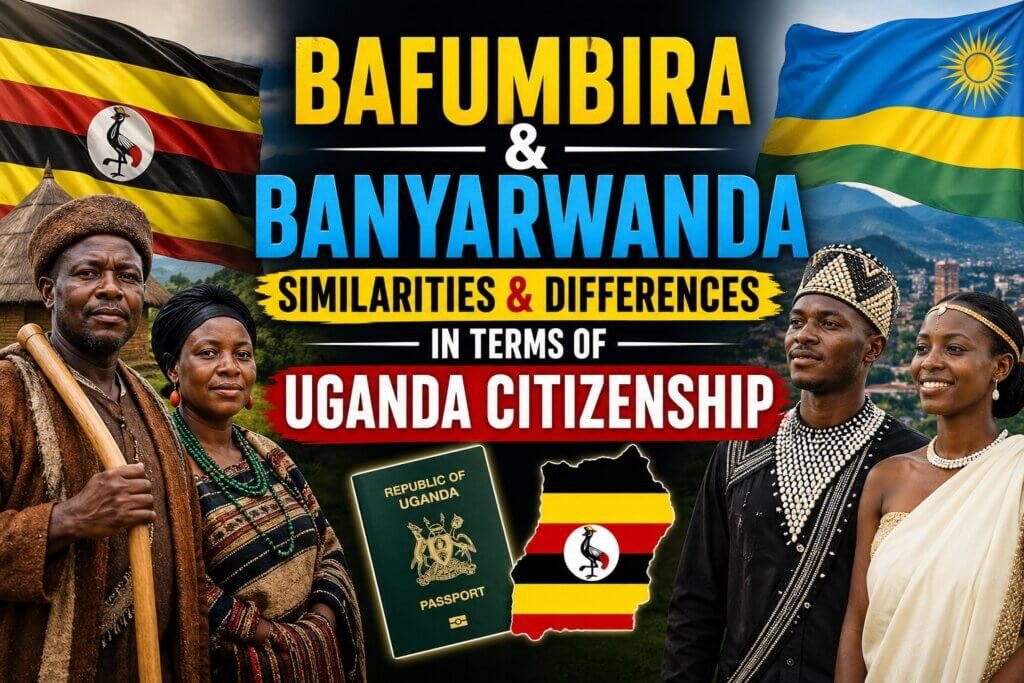
NB: In our other writings and videos, we have deeply explored the differences between the Banyarwanda and Bafumbira in terms of Ugandan citizenship. Read this here or watch the full video here.

A very informative article. A must read, especially for those who seek to be better informed about the Bafumbira vis-a-avis Banyarwanda history in Uganda. As Kinyarwanda speaking Ugandan, I don’t know which two languages are as close as Urufumbira/Urunyarwanda! Most importantly, we are the very same black people, especially to other races.
Yes, Banyarwanda and Bafumbira are basically the same people. They share historical origin, culture, and even the language is so close or similar. The major difference is historical timeline when it comes to being Ugandans. This information can come in handy if some people try to mix issues for their selfish reasons. Otherwise, twese turibamwe.
[…] have already written dozens of articles about Bafumbira and their origin (see here, here, and here). However, for the benefit of special readers of this special article, let’s give a […]