

Africa in Christianity History: Is Christianity a White Man’s Religion? Explore with me!

A few days ago, I had a WhatsApp conversation with a few members of Bafumbira Beza and they generally accused the west or the ‘whites’ of bringing Christianity or their religions and forcing them onto Africans. It’s not these members alone!
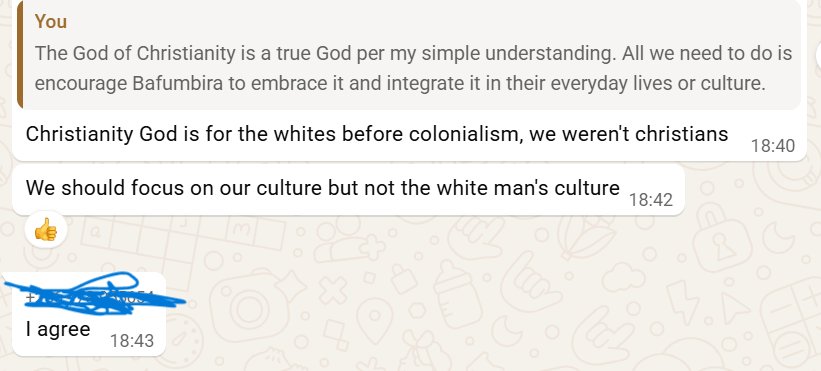
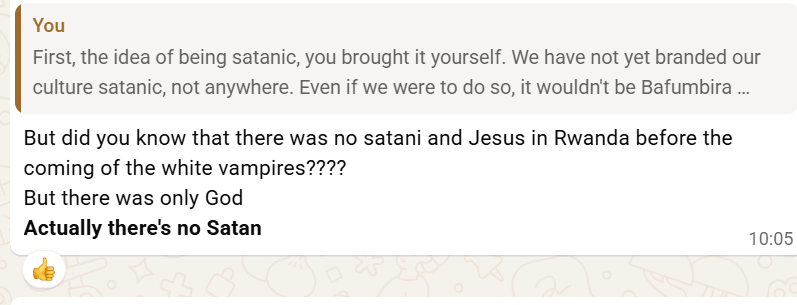

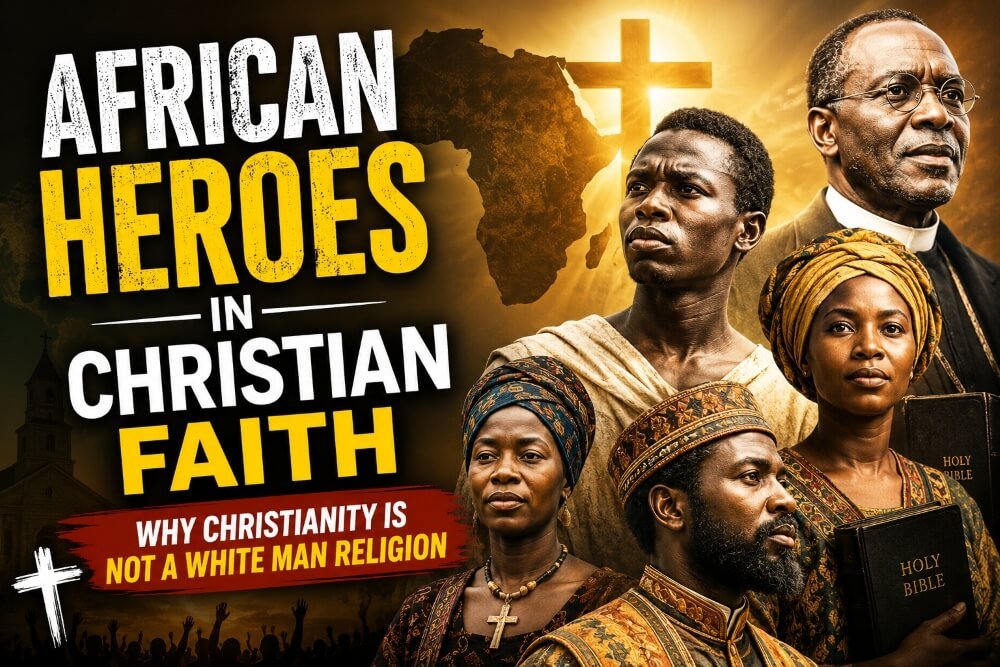
A very common mistake today is the idea that Christianity belongs to Europe or the West. Many people, especially the youth, assume it is a “white man’s religion” that was brought to Africa only a few centuries ago.
However, history tells a completely different story. Long before the faith spread through Europe, Africa was already a central hub for Christian thought, leadership, and scripture. The very foundations of the Christian faith were built, protected, and expanded by African heroes, forefathers, and scholars. Despite all the exploitations, hooliganism, crime, and lawlessness embedded within the history of Christianity as a culture (the same way it is with all other cultures), scholars (see here, here, and here) agree that Christianity is not a white man’s religion.
In this brief article, we will explore the presence of Africa throughout the Bible and the history of Christianity.
African Heroes Built Christianity foundations
Africa is not a late addition to the biblical narrative. It is woven into the text from the very beginning. In the Old Testament, the continent appears frequently as a place of refuge, power, and wealth. Lands like Cush and Egypt were central to God’s global story.
Great figures like Hagar and Asenath, both Egyptian women, became foundational mothers to millions of descendants. Later, when the prophet Jeremiah was trapped in a muddy well and left to die, it was an African hero named Ebed-Melech who risked his life to rescue him. During the days of the kings, a powerful Cushite pharaoh named Taharqa marched his armies out to defend King Hezekiah against the invading Assyrians.
In brief, below are significant African heroes embedded within the beginnings of Christian faith
- Ham: Son of Noah and a major forefather. His descendants populated the African continent, including the regions of Cush (Sudan/Ethiopia) and Mizraim (Egypt).
- Nimrod: Grandson of Ham. The Bible calls him the first “mighty man on earth” and a fearless hunter.
- Hagar: An Egyptian woman who became a mother to Ishmael. God spoke directly to her and promised to make her descendants a great nation.
- Asenath: An Egyptian noblewoman who married Joseph. She was the mother of Ephraim and Manasseh, making her a founding mother of two major tribes of Israel.
- Phinehas: A high priest and grandson of Aaron. Scholars note his name is an Egyptian-Nubian word meaning “the dark-skinned one” or “the Nubian”
- Queen of Sheba: A wealthy and wise African queen. She traveled to Jerusalem to test King Solomon with hard questions and praised the God of Israel.
- Ebed-Melech: A brave Cushite (Ethiopian) official in the royal palace. He risked his life to rescue the prophet Jeremiah from a deep, muddy well.
- Taharqa (Tirhakah): A powerful Cushite pharaoh of Egypt. He marched out with his army to help King Hezekiah fight off the Assyrians (2 Kings 19:9).
These stories show that Africans were never passive bystanders in the Bible. They were active protectors of God’s people and instruments of His divine plans.
Africa at the Center of the New Testament
When we look at the life of Jesus and the birth of the early Church, Africa remains front and center. When Jesus was a helpless infant fleeing the death threats of King Herod, God did not send His Son to Europe for safety. He sent him to Africa, finding refuge in Egypt.
At the end of Jesus’ earthly ministry, as He stumbled on the path toward Calvary, a North African man named Simon of Cyrene was chosen to carry the heavy wooden cross. Shortly after the resurrection, the Holy Spirit led the evangelist Philip to baptize a high-ranking Ethiopian royal treasurer.
This African leader carried the Gospel back to his homeland, establishing one of the oldest Christian nations on earth. Furthermore, early church hubs like Antioch relied heavily on African prophets and teachers, such as Simeon called Niger and Lucius of Cyrene, to launch the very first global missionary journeys.
Again, briefly are these African heroes spread across the New Testament story:
- Simon of Cyrene: A man from North Africa (modern-day Libya). The Roman soldiers forced him to carry the cross of Jesus on the way to Calvary.
- The Ethiopian Eunuch: A high-ranking royal treasurer for the Queen of Ethiopia. He is celebrated as the first individual African convert to Christianity after being baptized by Philip.
- Simeon (called Niger) and Lucius of Cyrene: Two prominent African leaders and prophets in the early Church at Antioch. They helped ordain and send out the Apostle Paul for his missionary journeys.
- John Mark: The author of the Gospel of Mark. Early church tradition states he was born in Cyrene, North Africa, and later founded the historic Church of Alexandria.
Intellectual Giants Who Defined the Christian Faith
Perhaps the strongest proof that Christianity is not a Western religion lies in the intellectual history of the early Church. During the first few centuries after Christ, the greatest theological minds on earth were based in North Africa, not Europe. Cities like Alexandria and Carthage were the absolute centers of Christian scholarship.
African thinkers literally shaped the language that Christians use today. Tertullian, a brilliant lawyer from Carthage, was the very first person in history to use the word “Trinity” to describe God as Father, Son, and Holy Spirit. Another Egyptian bishop, Athanasius, stood boldly against intense political pressure to defend the true deity of Jesus, ensuring the core of the Gospel was preserved for future generations.
Additionally, Augustine of Hippo, who lived in modern-day Algeria, wrote deep theological works on grace and salvation that still guide Christian thought all over the globe today. Without these African scholars, global Christian theology would look completely different.
In brief, these are the forefathers of the church and they were African:
- Tertullian of Carthage: A brilliant lawyer and writer from modern-day Tunisia. He is famous for being the very first theologian to use the word “Trinity” to describe God.
- Athanasius of Alexandria: A bold bishop from Egypt. He stood up against fierce opposition to defend the truth that Jesus is fully God, preserving the core message of the Gospel.
- Augustine of Hippo: A theologian from modern-day Algeria. He is widely considered one of the most influential thinkers in Christian history, famous for his deep writings on God’s grace.
- Clement and Origen of Alexandria: Two massive scholars from Egypt who ran the world’s leading Christian school of theology in the early centuries.
African Heroes of the Christian faith!
Christianity did not start in Europe. It began in the Middle East and immediately flowed south into Africa long before it traveled west. The historical truth is clear: Christianity is a global faith with deep, undeniable African roots. Far from being a Western import, Africa helped cradle, define, and defend the Christian faith from its very infancy.



Responses