

The Abagunga Clan: Origins, History, Cultural Legacy, & General Characteristics or Behavior

Today, a member of Bafumbira Beza asked us to dive deeper into Abagunga Clan (or Abagunda, if we take the Ankole naming). He insisted he needed to know more about the clan.
NB: Bafumbira Beza members always ask us to dive deeper into their clans and we write full dedicated articles and videos on each of the clans. If your clan is not covered or you would like to do you the honors, just let us know. Otherwise, read all clan-focused articles here. Thank you. Now, let us get back to the point:
The Abagunga clan (singular: Umugunga or Omugunga, for Ankole people) is an aristocratic and historic lineage whose identity is deeply woven into the pre-colonial sociopolitical fabric of East Africa’s Great Lakes region. Primarily established across modern-day Uganda, Rwanda, and northwestern Tanzania, the Abagunga have historically functioned as a highly respected sub-clan embedded within the region’s primary ruling houses, specifically the Abanyiginya of Rwanda and Abahinda of Uganda.
Known for their deep pastoralist traditions, oratorical prowess, and military duty, the clan remains a vital piece of the broader regional heritage. In this brief article, let us deeply explore these guys!
Origins and Historical Evolution
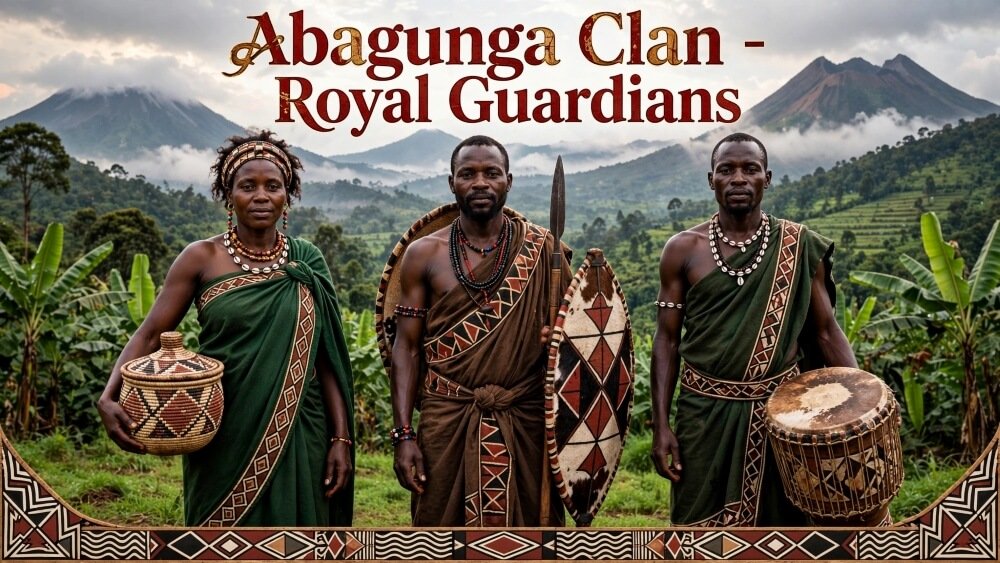
The historical genesis of the Abagunga is intrinsically linked to the ancient monarchies of the Interlacustrine region. In pre-colonial Rwandan oral tradition, the Abagunga trace their lineage back to Prince Mugunga, a son of Mwami (King) Ndoba.
King Ndoba was an early ruler of the highly influential Nyiginya Dynasty (the Abanyiginya dynasty) which consolidated power in central Rwanda from the 15th century onward. He is listed among the kings that quietly and yet wisely ruled Rwanda by some cultural bloggers.
Consequently, within Rwanda, the Abagunga are recognized as a prominent aristocratic branch of the broader Abanyiginya royal clan. In other words, Abagunga are a sub-clan of Abanyiginya clan. No doubt about this. Some evidence shows they (Abagunga) had an ancient Kingdom in DR Congo.
Over successive centuries, population expansions and succession disputes led various branches of the Abagunga to migrate northward. They crossed into the Nkore (Ankole) Kingdom of southwestern Uganda and parts of the Kigezi region. In Ankole, they successfully integrated into the ruling aristocratic architecture, becoming formally categorized as one of the 16 specialized sub-clans forming the venerable Abahinda clan, the descendants of King Ruhinda.
It is important to note that they are not necessarily called Abagunga in Ankole, but Abagunda. They are indeed a sub-clan of Abahinda in the Ankole region.
                [ Nyiginya Dynasty / Royal Lineage ]
                                 │
                     Prince Mugunga (Son of Ndoba)
                                 │
                       ┌─────────┴─────────┐
                       ▼                   ▼
                [ Rwanda Branch ]   [ Uganda Branch ]
                Sub-clan of the     Sub-clan of the
                  Abanyiginya           Abahinda
Totems and Cultural Taboos
We have talked about totems a thousand times. However, in case you missed it, here it is: in the cultural frameworks of Great Lakes communities, Bufumbira, Rwanda, Uganda, Burundi, DR Congo, or wherever across Africa, clans utilize totems (omuziro) to preserve family lineage and enforce exogamy (the prohibition of marrying within one’s clan). The Abagunga align their identities with the broader parent clans they branched from:
- In the Ugandan (Ankole) Lineage: As a branch of the Abahinda root, the Abagunga traditionally share a deep reverence for specific historical taboos. They recognize Amashereka (human breast milk) as a defining ancestral taboo, alongside the Enkyende (the Vervet Monkey), which is standard among branches of the Abahinda.
- In the Rwandan Lineage: The Abagunga branch embedded within the Abanyiginya identifies with the Umusambi (Grey Crowned Crane), the sacred animal totem traditionally assigned to the Rwandan royal house.
Harmed or consumed totem animals are strictly forbidden, as doing so was traditionally believed to invite spiritual misfortune, crop failures, or the loss of cattle.
Historical Roles and Governance
The Abagunga were explicitly “Royal Guardians,” a characterization derived from their structural placement close to the monarchy. Rather than working as common laborers, their societal roles were predominantly political, military, and administrative:
- Advisors to the Crown: Senior Abagunga elders sat in royal courts (agacaca or lukiiko variants), serving as direct councilors to the Kings (Abami or Abagabe). They played pivotal roles in resolving succession deadlocks and preserving royal genealogy.
- Political Leaders and Miltary Command: Young Abagunga men were heavily represented in the elite royal warrior regiments (amatorero or ingabo) tasked with defending territorial integrity and leading strategic cattle expeditions. On this, we truly have many names to list. We begin with Prince Mugunga, a son of King Ndoba. We have Ngabo, a son of Mugunga who was an army commander. Then we have the famous chief Kanyamuhungu, the guy that led the migratory groups towards the North into the modern-day Kisoro, Kigezi, and Ankole, and negotiated alliance pacts with the ruling Abahinda clan of the Nkore Kingdom, safely integrating his people into the new territory as recognized aristocrats. Abagunga can also be found in DR Congo since time memorial!
- Estate Administrators: They frequently served as land and cattle chiefs (Abatware), managing vast communal grazing lands and enforcing tributary collection on behalf of the throne.
Societal Characteristics or General Behaviors of Abagunga
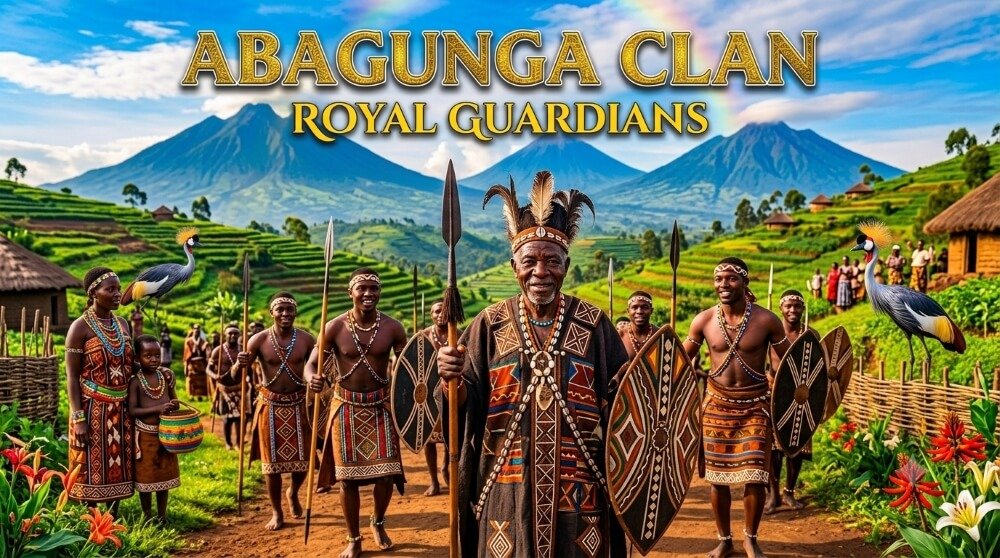
This is usually a delicate part of these articles, for we truly look the cultural and historical background of the clan and generalize their behaviors or characterists. As always, we caution, take these assumptions with a grain of salt! Back to the point:
Based on the historical origin of the Abagunga as a royal sub-clan of the Abanyiginya (Rwanda) and the Abahinda (Uganda), their traditional behaviors are deeply rooted in an aristocratic, pastoralist (cattle-keeping), and leadership culture. We continue to argue that, while individuals today are modern citizens, historical clan traits often pass down through family values, generational upbringings, and cultural expectations , bringing us to the general characteristics within each lineage.
Here is how someone from the Abagunga clan is traditionally expected or likely to behave:
1. Diplomatic and Oratorical Excellence
Historically, Abagunga elders were court advisors and poets who practiced reciting heroic poetry. As such, they are likely to be highly articulate, diplomatic, and deliberate in their speech. They prefer resolving conflicts through dialogue, structured arguments, and intellect rather than rash actions. They often make excellent public speakers, lawyers, or mediators.
2. Natural Leadership and Confidence
As “Royal Guardians” directly descended from kings and chiefs, leadership is viewed as a generational responsibility rather than a newfound privilege. Therefore, they carry themselves with an innate sense of dignity, self-worth, and quiet confidence. In social or professional settings, they naturally gravitate toward managerial, supervisory, or leadership roles, expecting their opinions to be respected.
3. Deep Loyalty to Family and Heritage
Because the Abagunga had to protect royal lineages and guard kingdoms, loyalty was a matter of survival. They are fierce protectors of their family unit and inner circle. They place a very high premium on loyalty and trust. If a family member or friend is in trouble, an Abagunga is culturally wired to step in as a shield or guardian.
4. Appreciative of Wealth and Quality (The “Cattle” Mindset)
In their history, wealth was measured by the quality, beauty, and size of longhorn Inyambo cattle herds. This translates into a modern appreciation for high quality, investment, and long-term asset accumulation (like land or real estate). They are rarely impulsive spenders; instead, they focus on building sustainable, generational wealth and maintaining a respectable social standing.
5. Stoic and Emotionally Controlled
Elite warrior regiments and royal advisors in the ancient Great Lakes region were trained never to show panic, fear, or excessive emotion in public. Umugunga or Umugunda is likely to appear calm, reserved, and composed under pressure. Even during major crises, they tend to maintain a “poker face” or stoic demeanor, choosing to process emotions privately while presenting strength to the outside world.
6. Strict Respect for Boundaries and Order
Because their traditional totem systems (like avoiding Amashereka or the Umusambi) required strict discipline, and royal courts required rigid protocol, they value structure. Every culture has this, especially if they have a totem and are still true to their heritage. Bagunga or Bagunda respect boundaries, hierarchy, and traditional values. They are likely to be highly organized and expect others to respect their personal space and time.
Have we missed something? Share with us in the comments or contact us. Thank you.
Responses