

Abarihira (Barihira) Clan: One of the Scholarly Clans among Bafumbira, Bakiga, and Banyarwanda!

Abarihira Clan, who are they? And where are they? What do they do? Let’s jump in! If there is a Mufumbira, Munyarwanda, or Mukyiga (Mukiga) who loves stuff to do with books, seeking wisdom, deeper education, and scholarly work, chances are they are from the Abarihira Clan.
In fact, one of my favorite bloggers, Muniini K. Mulera, highlights one such a wise and scholarly Murihira man, Mr. Festo Karwemera (1925-2020). According to Mulera, Mr. Karwemera is a true definition of what the Abarihira clan is always about; books and knowledge, patience and wisdom, mentorship and education, and love for their culture.
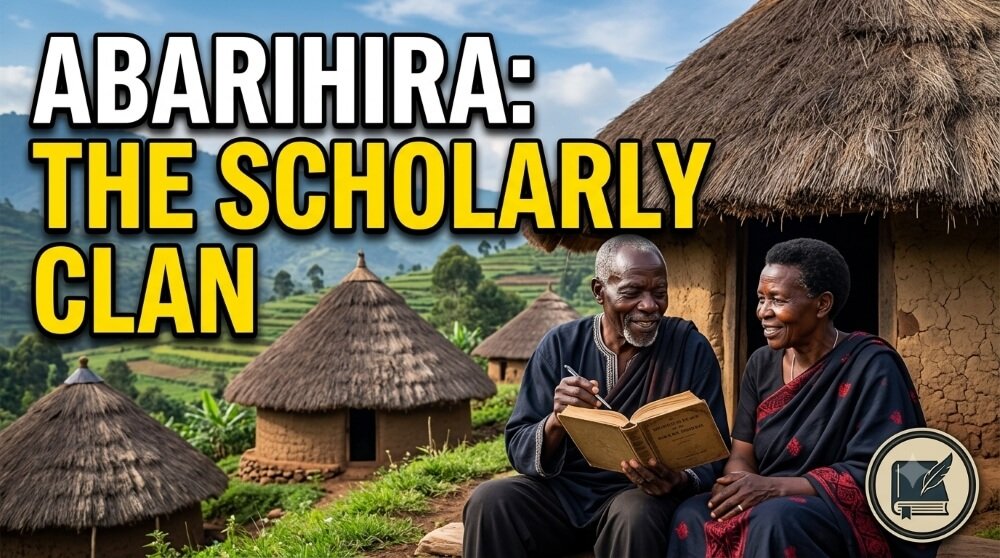
Muniini Mulera talks of another Murihira scholar, Erinasani Tumwesigye (Ba-karobwa of the cow, Ngoobe totem – 1946 to 2025), who tutored and mentored many students and was also skilled in various other endeavors, including chess, piano, athletics, and tennis. Mulera insists that, if opportunities existed, Tumwesigye would compete for Nobel Prize or be among the best Jazz singers in the US and the world.
Other notable Barihira figures are Steven Bamwanga (a politician and surveyor) and John Ndyomugyenyi.
Additionally, a few days ago, a gentleman from Ntungamo (thought currently stays somewhere in the central Uganda), Mr. Byaruhanga Francis, called me and thanked me for the work we are doing here at Bafumbira Beza. And he is a Murihira too. We discussed a lot of stuff, including the history of Kisoro, modern-day kisoro life, Abarihira, and much more, and I realized he too is a true defintion of being a Murihira; the love for knowledge and the pride and confidence in our culture.
So, are you a Murihira? In other words, do you love and seek knowledge, lol? By the way, for Barihira people, Join a dedicated group for Abarihira clan here on Bafumbira Beza and meet your fellows! Otherwise, in this brief article, let us explore all that is possible about Abarihira Clan. Are you with me?
The Origin and Totem of Abarihira Clan
The Abarihira Clan is likely one of the foundational and possibly one of the oldest Clans in Rwanda, Bufumbira, DR Congo, and Kigezi among the Bakiga. Like most other clans in Bufumbira and Kigezi, Abagiri are part of the foundational clans in the pre-colonial Rwanda, and migrated or settled in Kigezi under various circumstances and time periods.
Unfortunately, for some reasons, little is written about this clan. For example, Rwanda’s great book, the History of Rwanda, does not mention Abarihira anywhere. While the book is not specifically meant to mention all clans, it surely does a great deal for others, but not Abarihira.
Additionally, the cultural historian and scholar, Mr. Nsanzabera Jean de Dieu, does not mention or find Abarihira to be among the top 26 foundational clans among the Banyarwanda (and Bafumbira). Even if you typed Abarihira clan on Google, you would not get a lot.
However, the Wikipedia article about Bafumbira mentions Abarihira as one of the foundational clans, even though references for this mention do not work out as the links are no longer available. Importantly, Mr. Karwemera chronicles Abarihira as one of the many clans that originate from Karobwa. As such, Abarihira are sometimes called Ba-Karobwa (Abarihira Ba-Karobwa).
Karobwa is said to have been a wife to a man, Ishenkurubo Kwaaga, and they together gave birth to children, Kabwiiga and Karihira who took after the mother’s name probably because she was from a culturally prominent background. Remember, it is not the first time that children are taking after their mother’s instead of father’s side. Abacyaba did it too.
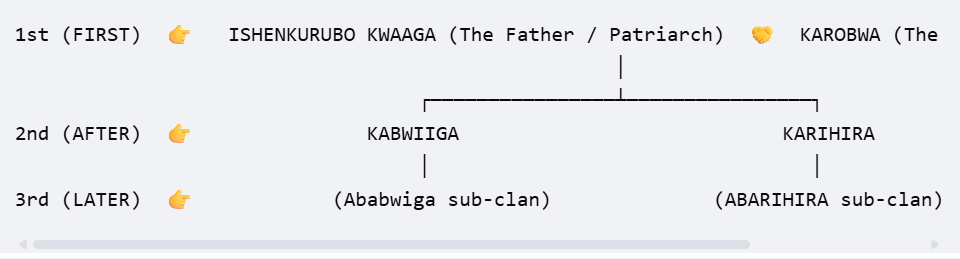
Anyway, from Karobwa, many families come about, right? Those that come from her son, Karihira, become Abarihira or Abarihira Ba-Karobwa, and those that come from other branches become other clans or sub-clans.
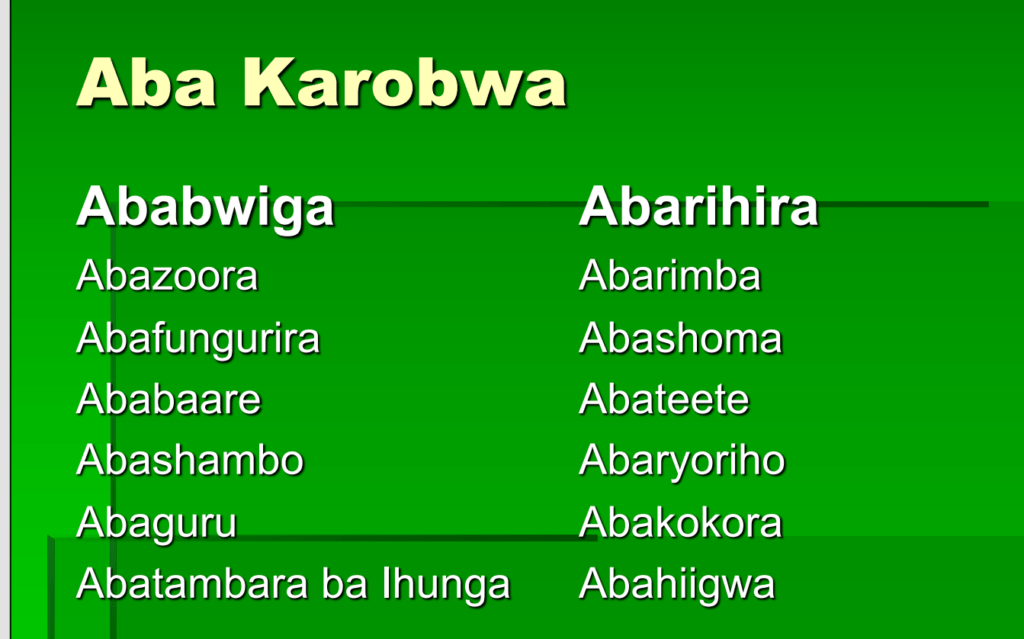
Therefore, Karobwa is the ancestral figure or father of Abarihira (through Karihira), and many other clans such as Abarihira ba Muyebe, Abashambo, Abaguru, Abateete, Abaguru, Abahiigwa, Ababaare, Abashoma, Abarimba, Abaryoriho, Abakokora, Abafungurira, Abazoora, etc among the Bakiga and overall Banyakyigezi. See the distribution of these clans below:
According to Mr. Karwemera, Abarihira have clan allies or friends (Abakumbi): and these are mostly the Abasigi and Abakimbiri.
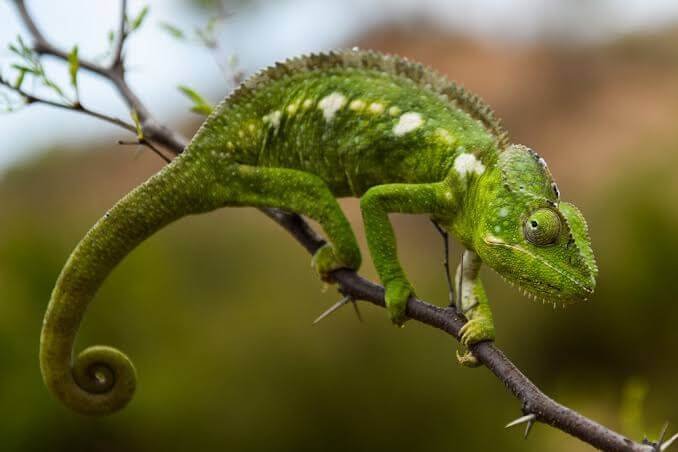
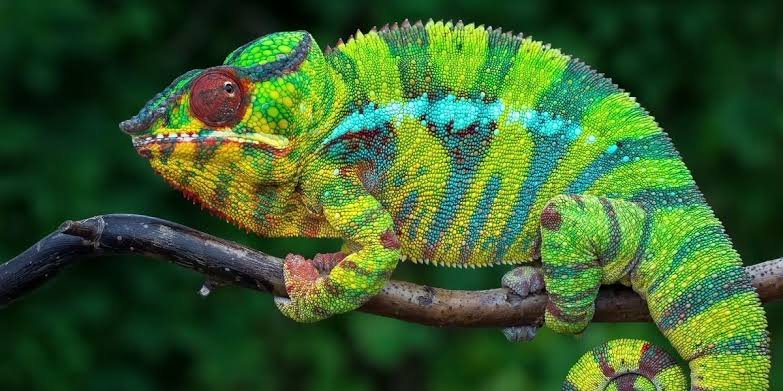
The totem for Abarihira is mainly a Chameleon (Urwunvu), which is ‘Enyaruuju’ in Rukiga Language. I hope you, Bafumbira Beza colleagues, know a Chameleon, right? It is a very beautiful slow-and-steady-moving and very gracious creature that is capable of changing its color according to its surroundings! See below.


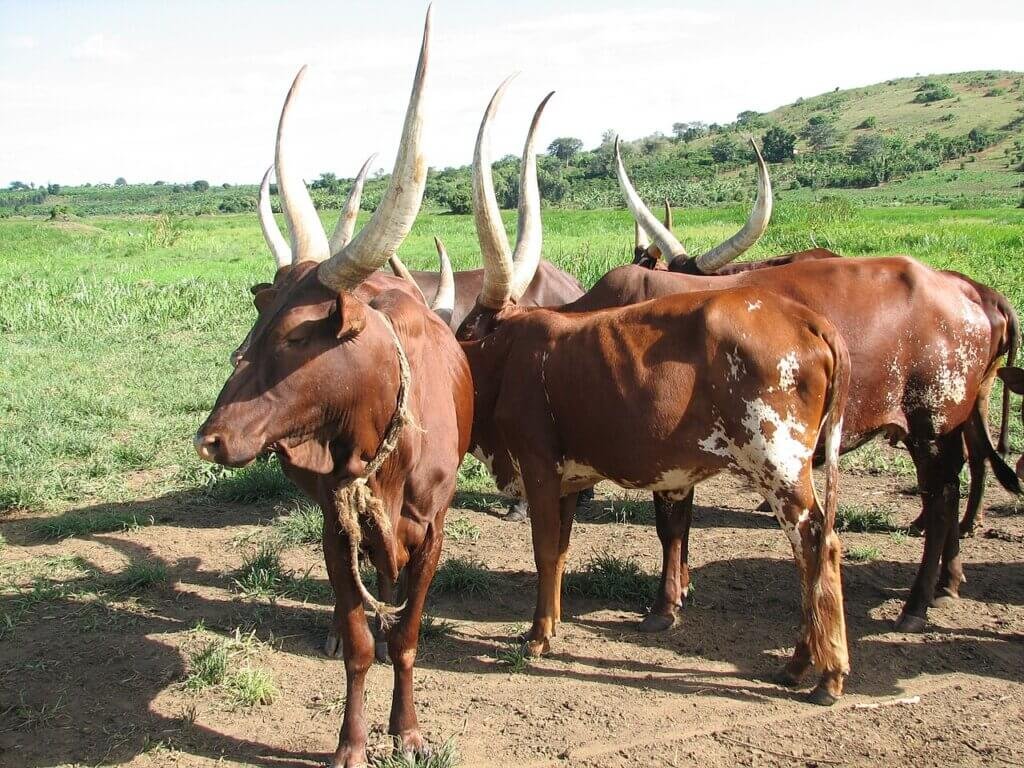
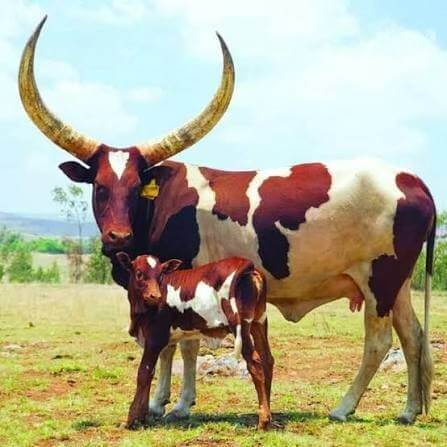
Some sub-clans or houses or families of Abarihira have a certain cow (cattle) with a specific brindled, striped, or patchy coat pattern as their totem. In Rukiga language, Mr. Karwemera calls this cow, ‘Ente Ngoobe Yoona’.
Historical Roles and Contributions
I must confess; Abarihira are one of the few clans that have had easy-to-find prominent figures to look up to. Even others have strong and notable figures, but knowing who they are is not easy! In the same way, their (Abarihira) historical roles and contributions are clear:
1. Social Reformers at Kisiizi Falls: The Abarihira were pivotal in ending the ancient, tragic practice of Aheibanga (abandoning or pushing unmarried pregnant girls off the sheer cliff of Kisiizi Falls). It is said that, before 1954, more than 100,000 girls were killed through this way. According to historical accounts (published in daily monitor here, here, and here), an Abarihira girl who was brought to the falls by her family held onto her father and brother so firmly that she pulled them down into the depths with her.
Following this heartbreaking event, in the words of Moses Mugume as quoted in the Daily Monitor, ‘it is at this point that the community members realized that this was a bad norm’. Wait! What else have we missed realizing simply because it has not yet affected us personally? Think about it!
Anyway, from then, the Abarihira elders boldly initiated cross-clan meetings to officially ban the custom long before colonial or religious interventions took root. When religious missionaries came in 1956, they took over the spot and even established a hospital, Kinkiizi Hospital, in 1958, turning the valley of death into a life-saving facility and now a tourist attraction.
We thank the hero, the Murihira girl, who saved the day or days, for the ritual had been performed for about 300 years until 1954.
2. Cultural and Historical Custodians: They are historically revered for preserving the linguistic and oral history of the southwestern highlands through traditional music, poetry, and customary law. As we already highlighted, Abarihira are scholars and educators, and thus custodians of law and culture.
3. Cultural arbitration. Historically, Abarihira served as mediators in local disputes (land, family, marriage, etc) using their deep-seated knowledge of customary law to reconcile families and individuals.
General Characteristics or behaviors of Abarihira
Well, based on what we already know, members of the Abarihira Clan (and the broader Ba-Karobwa) are historically characterized by the following specific societal traits:
1. A Intellectual Prominence and Passion for Learning: They have a strong reputation for academic excellence, deep research, and a natural affinity for teaching and literacy. In Uganda, the Abarihira are famously teased and respected for having an “unfair abundance of the intellectually advantaged”. They are heavily associated with academic excellence, sharp logic, and scholarly pursuits.
2. Diplomatic and Measured: They are often described as calm, calculated, and philosophical. Rather than acting on rash impulses, they prefer to analyze situations and resolve conflicts through dialogue. As such, they are always called upon to act as mediators and arbitrators.
3. Deep Cultural Pride: Members of this clan tend to exhibit a fierce loyalty to their heritage, actively seeking to preserve local dialects, family lineages, and historical oral records. It is for this reason I was able to get a few names of Barihira. Other clans have prominent figures too. However, it can be hard to know them!
4. Oratory and make good speakers and politicians. Abarihira are culturally noted for producing powerful public speakers, politicians, and master storytellers.
5. There are other two traits that I have been told about, but have found no concrete documented evidence. One is that Abarihira usually participate or take on the cultural tradition of Obukumbi (also referred to as Okukumbirana or Okuteerana Obukumbi), which is a prominent game of cracking jokes with one another, mostly among all the ‘westerners’ (specifically among Abakimbiri of Ba-Mugiri or Abagesera, Abarihira Ba-Karobwa, and Abagara – Abacyaba).
6. The second habit is called “Abazira Kwanga” (literally translating to “Those who refuse to refuse” or “Those who cannot say no”). Oral stories say this was a deeply binding code of honor woven into their their culture and which dictated how they treated strangers, survived hardships, and managed communal power.
Conclusion on Abarihira
Ultimately, the Abarihira clan stands as a historic pillar of intellect and resilient unity in the Great Lakes region, forever defined by their brilliant oratory tradition, intellectual power, and an unwavering, sacred code of radical hospitality (Abazira Kwanga). Whether navigating the Kigezi highlands or the volcanic hills of Kisoro, an Omurihira or Umurihira remains a respected custodian of cultural peace-weaving and community leadership.
Tell us, what have we forgotten? What is your question?

Responses