

Museveni Once Labelled Bafumbira as Quarrelsome, Are They? Explore this with me!

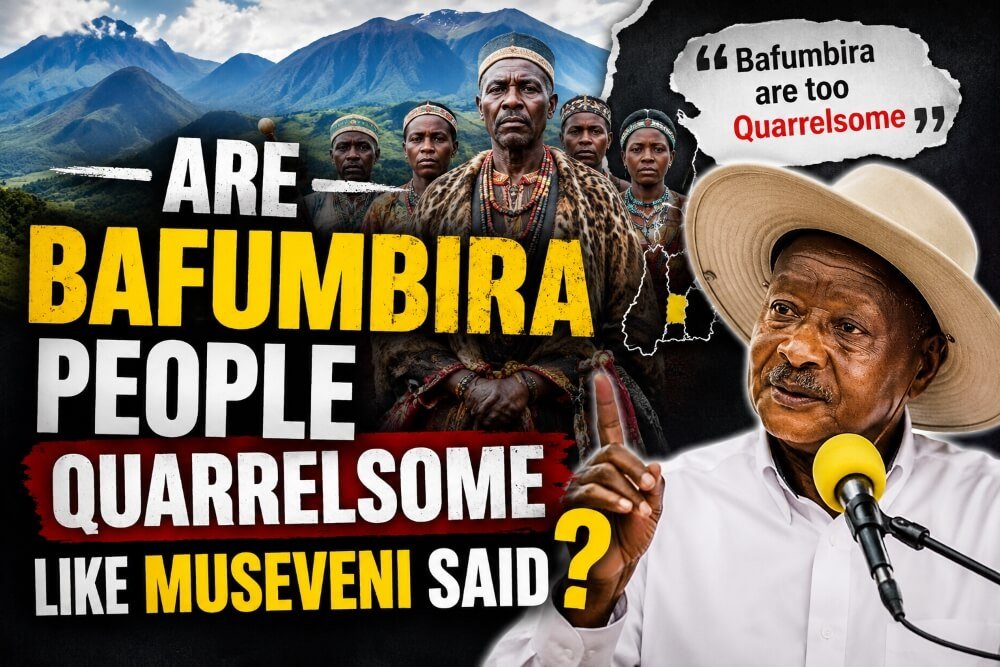
Are Bafumbira Quarrelsome? See this: In September 2024, during the sendoff or burial of the late Honorable Sarah Nyirabashitsi, Ugandan President, Yoweri Kaguta Museveni Tibuhaburwa, made a statement describing the Bafumbira people as “quarrelsome” (read here too).
While praising Sarah’s gentleness, the president remarked: “..Because you know how quarrelsome those Bafumbira can be, so when you hear people give testimony that she was good, you know that she was really good“.
This remark sparked debates across Uganda and among Bafumbira, raising questions about the basis of such a characterization and its validity. President Museveni’s statement, while seemingly anecdotal, warrants a deeper exploration to determine whether it reflects a cultural, historical, or sociological reality or is merely a stereotype. This article examines the question, “Are the Bafumbira people quarrelsome?”
But, first, who are Bafumbira?
Bafumbira and their origin
We have already written dozens of articles about Bafumbira and their origin (see here, here, and here). However, for the benefit of special readers of this special article, let’s give a hint:
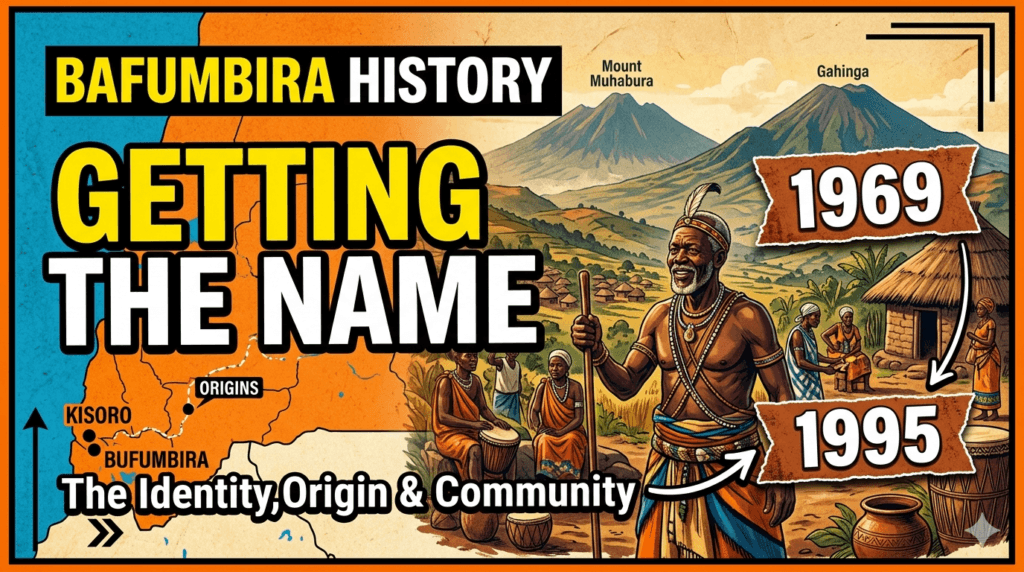
The Bafumbira are an ethnic group (or a tribe) primarily residing in the Kisoro District of southwestern Uganda. They are part of the larger Kinyarwanda-speaking people, sharing cultural and linguistic ties with Rwanda. Bafumbira and their Bufumbira (or Kisoro) were part of the Rwanda Kingdom until the 1910 border-shifts under colonial masters that saw them and their land get annexed to the republic of Uganda. As such, in terms of ‘anciency’, they are more native than almost all other tribes in Uganda.
Bafumbira and Being Quarrelsome: Is there any Evidence?
A fair reading of the evidence does not support the claim that Bafumbira, as a people, are inherently or statistically more quarrelsome than other communities. There is simply no hard empirical evidence strong enough to pin that characteristic on the entire group. However, some aspects or ways of life could perhaps explain where this stereotype originates from. These aspects or reasons do not prove that Bafumbira are “quarrelsome”; rather, they may help explain why some people have come to perceive them that way. Let’s explore them:
I. Frontier and borderland life versus quarrelling
The history of artificial separation from culturally related groups across borders is crucial for understanding Bafumbira identity formation, and probably some basis for what some would call ‘quarrelsome’.
As Chrétien (2003) argues, colonial boundary-drawing created new political identities while often maintaining cross-border cultural and familial connections. Available evidence suggests that this abrubt division of communities and exposure to other cultures instantly could lead to complex interrelationships between different communities, with both cooperation and competition occurring simultaneously.
Additionally, border communities frequently develop strong identities and a culture of defending territory, family and community interests. This can produce assertiveness, directness and vigorous debate. Cross-border factions, including security issues, refugee influxes, and geopolitical shifts between neighboring states frequently reverberate through Kisoro’s local political landscape, creating sharp ideological divisions among local political actors that occasionally spill into national discourse.
That said, assertiveness is not necessarily quarrelsomenes.
II. Rufumbira Language Could Imply Quarrelling to an Outsider!
Rufumbira is a tone language. This means that pitch is part of the language’s structure: changing the pitch of a syllable can change its meaning. For example, the Rufumbira grammar describes inda as “stomach” and índa as “louse”; the spelling is essentially the same, but the tone distinguishes the meanings. English is a non-tone language, implying that changing the tone does not necessarily change the meaning.
Academic research on Rufumbira confirms that lexical and grammatical tones are real features of the language. Nico Nassenstein’s doctoral research documents, for example, different pitch contours distinguishing inda (“stomach”) from indá (“louse”). In other words, expressing the meaning and emotions in tonal languages such as Rufumbira is messy, most times appearing like an argument to outsiders.
In Rufumbira, syllables in a word are each fully-pronounced or spoken and yet so fast! To someone who does not understand Rufumbira, rapid speech containing frequent pitch changes, clearly pronounced syllables and emphatic consonants can sound emotionally intense. But that is a perception, not evidence that the speakers are angry.
The same mistake can happen when outsiders hear unfamiliar languages elsewhere and interpret their rhythm or pitch as “harsh,” “angry,” or “argumentative.” Russian language has been stereotyped under this as well. A language can sound forceful without its speakers being forceful.
III. High Political Mobilization and Intense Intra-District Rivalries
Bufumbira has many educated and prominent figures across all sectors in Uganda, implying that it is common for any newsfeed to have at least one or two Bafumbira involved. Importantly, evidence shows that Kisoro District is a hotbed of election violence, petitions, and public walkouts. Even when only one political party is driving, members within that same party always find reasons to clash! From Bufumbira South to East and the North, political clashes are a common song!
It is even possible that Museveni was specifically talking about this political immaturily and violence when he said the Bafumbira are quarrelsome. Bufumbira has had other famous clashes, for example, the Protestant church Bishop clashes (see here, and here) and political leader clashes over other stuff other than elections (see here).
However, even for this, it is important to recognize that competitive Ugandan politics is itself highly conflictual. It would be a mistake to attribute political violence automatically to Bafumbira culture or people. Indeed, similar electoral conflicts occur across Uganda.
As I wind up on this, some other leaders have ever considered Bafumbira to be as calm and gentle as Batoro. In 2019, Hon. Justine Lumumba asked the Basoga to learn from Bafumbira and Batoro. In her words, she sarcastically joked: “Without trees, it is just anger. Let us copy the Bafumbira and Batoro. They are not as quarrelsome as us here in Busoga because of the cool environment in which they are born and grow”.
So, surely, between her and Museveni, who is right about Bafumbira?
Bafumbira and Quarrelling: Conclusion
In conclusion, there is no tangible or documented evidence that Bafumbira people are quarrelsome. While they may sometimes be perceived as such because of the way some individuals and leaders express disagreement, directly, passionately and unapologetically, it would not be fair or right to judge millions of people or an entire culture as quarrelsome. Importantly, whatever happens with them happens with every other culture, especially those that share similar historical and cultural structures. Museveni’s remark therefore offers an interesting starting point, not a verdict.
Thank you.
You wanna watch the videos on this?




Responses